 Reviews


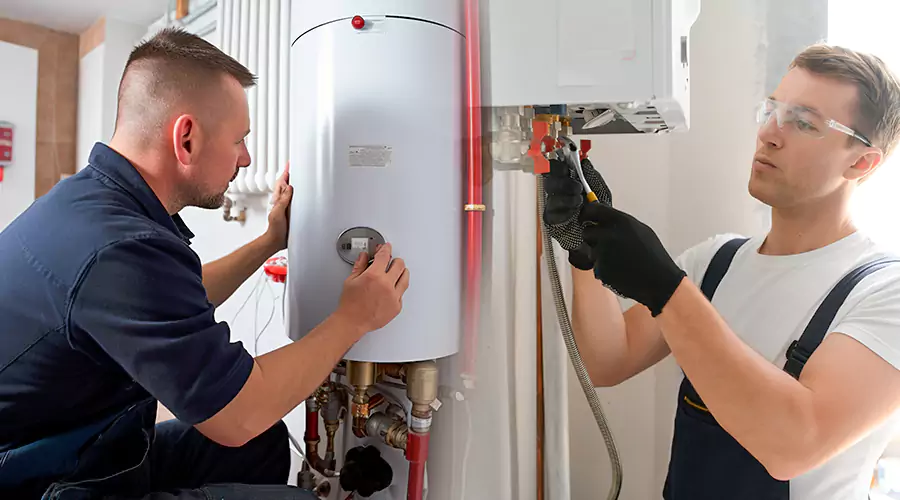
Choosing a new water heater is a major decision. The unit you select will affect your energy bills, your daily comfort, and your home's value for the next 10 to 20 years. The two main options are traditional tank water heaters and tankless water heaters. Both have real drawbacks. The right choice depends on your family's hot water usage, your budget, and your long term plans. This guide compares both types across seven key factors.
How Each System Works?
Traditional tank water heaters:
These units store 30 to 80 gallons of hot water in an insulated tank. The water is heated continuously to maintain a set temperature. When you turn on a hot water faucet, hot water flows from the top of the tank. Cold water enters the bottom to be heated. The burner cycles on and off throughout the day, even when no one is using water.
Tankless water heaters:
These units have no storage tank. They heat water on demand. When you turn on a hot water faucet, cold water travels into the unit. A gas burner or electric element heats the water instantly as it flows through. The unit only operates when you need hot water. When you turn off the faucet, the unit shuts off completely, making tankless water heater installation an efficient choice for continuous hot water and energy savings.
Factor 1: Energy Efficiency
Tankless water heaters are significantly more energy efficient. The Department of Energy estimates that tankless units use 24 to 34 percent less energy than traditional tanks for homes that use 41 gallons or less of hot water daily.
Why tankless is more efficient:
- No standby heat loss. A traditional tank loses heat through the tank walls. The burner cycles on periodically to reheat water that cooled down while sitting in the tank.
- Shorter operation time. The unit runs only when you need hot water.
Traditional tank efficiency:
- Newer tank models are more efficient than old ones. High efficiency condensing tanks can reach 90 percent or higher. However, they still suffer from standby heat loss.
Factor 2: Continuous Hot Water Supply
Tankless units provide an endless supply of hot water. You can take a long shower, run the dishwasher, and do laundry without running out of hot water.
Tankless reality:
- Endless does not mean unlimited flow. Each unit has a maximum flow rate in gallons per minute. If you exceed that rate, the water temperature drops. A family running two showers and a dishwasher at once may need two units.
Traditional tank reality:
- A 40 gallon tank provides about 30 gallons of usable hot water before the temperature drops. Once the tank empties, you must wait for a new tank to heat up. Recovery time ranges from 30 minutes to over an hour.
Factor 3: Lifespan and Durability
Tankless water heaters last longer. A traditional tank typically lasts 10 to 12 years. A tankless unit lasts 20 years or more with proper maintenance.
Why tankless lasts longer:
- No stored water means no internal rust from standing water.
- The heat exchanger is made of durable copper or stainless steel.
- Components cycle on and off less frequently.
Traditional tank limitations:
- The glass lined steel tank eventually corrodes from the inside. The anode rod slows this process but does not stop it. Sediment buildup accelerates corrosion. When the tank starts leaking, the entire unit must be replaced.
Factor 4: Upfront and Installation Costs
Traditional tank water heaters have lower upfront costs. A basic 40 gallon tank costs 400 to 600 dollars. Installation adds 200 to 500 dollars for a simple replacement. Total cost is 600 to 1,100 dollars.
Tankless costs:
- A whole house tankless unit costs 800 to 1,500 dollars for the unit alone.
- Installation is more complex. Gas units often need upgraded gas lines and new venting.
- Electric units may need upgraded electrical service.
- Total installed cost ranges from 1,500 to 3,500 dollars.
Hidden tankless costs:
- Many homeowners are surprised by additional work. A gas tankless unit may need a larger gas line from the meter. The existing vent may not meet code for tankless exhaust.
Factor 5: Space Requirements
Tankless units are much smaller. A typical unit is about the size of a suitcase. It mounts on a wall, either indoors or outdoors in warm climates. This frees up valuable floor space.
Traditional tank space:
- A 40 gallon tank is about 60 inches tall and 22 inches wide. It requires roughly 3 square feet of floor space plus clearance. The weight, about 400 pounds when full, limits placement options.
Factor 6: Maintenance Requirements
Both systems need maintenance, but the tasks are different.
Traditional tank maintenance:
- Flush the tank annually to remove sediment. This takes about 30 minutes with a garden hose.
- Check the anode rod every three years. Replace it when heavily corroded.
- Test the pressure relief valve annually.
Tankless maintenance:
- Descale the heat exchanger annually using a descaling solution and a circulation pump. This is more involved than flushing a tank.
- Clean or replace the inlet water filter.
- For gas units, inspect the burner and venting annually.
Tankless maintenance is more complex. Many homeowners hire a professional for annual descaling, costing 100 to 200 dollars per visit. Skipping maintenance voids warranties.
Factor 7: Performance in Cold Climates
Incoming water temperature affects performance dramatically. In northern climates where groundwater enters at 40 degrees Fahrenheit, a tankless unit works harder to reach 120 degrees. The flow rate drops significantly.
Example:
- A tankless unit rated for 8 gallons per minute at a 70 degree rise might deliver only 4 gallons per minute at a 90 degree rise. This means one shower at full flow, not two. Cold climate homes often need larger or multiple tankless units.
Traditional tanks in cold climates:
- A tank stores hot water regardless of incoming temperature. Recovery time is slower in winter because the incoming cold water is colder. However, the stored hot water is always ready at full temperature and flow.
Which Is Better for Your Family?
Use these guidelines to make your decision.
Choose a traditional tank if:
- You want the lowest upfront cost.
- Your family uses moderate amounts of hot water spread throughout the day.
- You prefer simple annual maintenance you can do yourself.
- Your home is in a cold climate with very cold groundwater.
Choose a tankless water heater if:
- You want endless hot water for back to back showers.
- You plan to stay in your home for 10 years or more and want the longer lifespan.
- You have limited floor space and want to mount the unit on a wall.
- You are willing to pay for professional descaling each year.
Final Thoughts
Both systems serve families well. The traditional tank wins on upfront cost and simplicity. The tankless wins on energy efficiency, lifespan, and continuous hot water. Calculate your family's peak hour hot water usage. Get quotes for both options including any necessary upgrades. Match the technology to your specific situation, not just to marketing claims, and you will enjoy years of trouble free hot water.